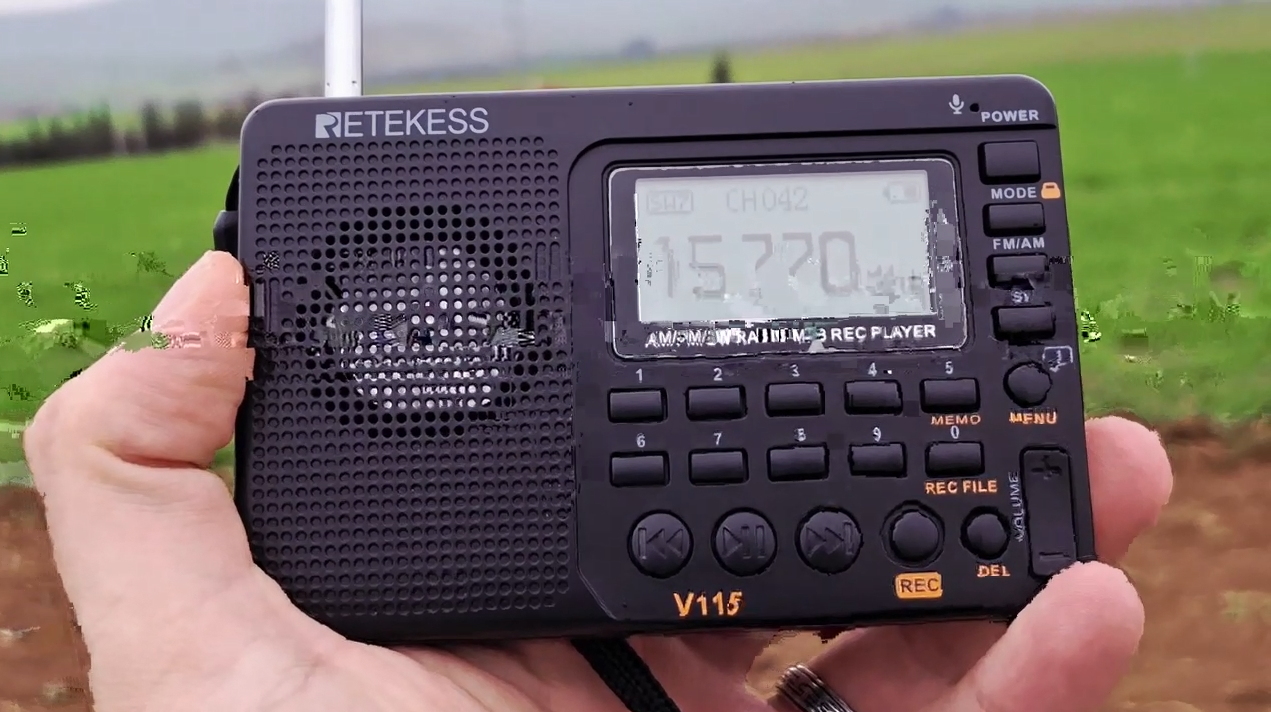
While the digital age has transformed media consumption in urban centers, shortwave radio remains a critical, resilient, and widely used medium across the globe. Unlike the internet, shortwave signals require no data plans, no fiber-optic cables, and no cellular towers. This makes it the primary source of information for hundreds of millions of people in remote, underserved, or politically restricted areas.
Estimating the exact number of shortwave listeners is challenging due to the passive nature of the technology (it does not "ping" a server). However, data from the International Telecommunication Union (ITU) and major international broadcasters (such as BBC, VOA, and others) suggest a consistent global audience.
Total Estimated Audience:150 to 200 million regular (weekly) listeners.
Receivers in Circulation:600 million+ units worldwide.
Market Trend: While "hobbyist" listening is often the norm in the West, "essential" listening (for news, religion, and education) is growing in other parts of the world due to the rising costs of mobile data and increasing internet censorship.
Estimated Audience: 80–100 million.
Context: Africa has the highest density of shortwave listeners. In countries like the DRC, Nigeria, Ethiopia, and South Sudan, shortwave is often the only way to reach rural populations.
Usage: Primarily for news, health education, and religious programming.
Estimated Audience: 50–70 million.
Context: India and China remain massive markets. In rural India, shortwave is a staple for agricultural news. In China and North Korea, despite government efforts to jam signals, shortwave remains a vital link to the outside world.
Usage: Language learning, political news, religion and music.
Estimated Audience: 20–30 million.
Context: Shortwave has a deep-rooted history here. In the Amazon Basin and the Andean Highlands, topography makes FM/AM signals unreliable, leaving shortwave as the dominant medium.
Usage: Community organizing, religious teaching (very high demand), and emergency alerts.
Estimated Audience: 5–10 million.
Context: Here, the audience is specialized. It consists of "DXers" (hobbyists who enjoy the challenge of long-distance reception), amateur radio operators, emergency preparedness enthusiasts, and political/independent news seekers.
Usage: Alternative news, political commentary, religion and hobbyist culture.
The shortwave audience is a "bimodal" demographic, meaning it captures two very different groups:
Economic Status: Low-to-middle income.
Education: Varies widely, but relies on audio for literacy-building.
Motivation: Access to basic information that is otherwise unavailable. They listen because they must to stay informed.
Gender: Historically male-leaning, but religious and health programs attract a high percentage of female listeners.
Economic Status: Middle-to-high income.
Education: Highly educated (often engineers, tech enthusiasts, or history buffs).
Motivation: Seeking "the truth" outside of mainstream corporate media or enjoying the "magic" of analog technology.
Gender: 85%+ Male.
Privacy & Anonymity: Unlike a website, a radio does not track your IP address. In regions with heavy surveillance, shortwave is the only safe way to consume "restricted" information.
Zero Cost of Entry: A $3 radio works for years. No monthly subscription or "top-up" cards are required.
Discovery: Shortwave listeners are "dial-spinners." They actively search for new signals. This makes it one of the few media where a new broadcaster can build an audience purely through "stumble-upon" discovery.
Resilience: During natural disasters or civil unrest when the internet is cut, the shortwave signal from WRMI continues to arrive from the sky.
Broadcasting on WRMI for $1 per minute gives you access to a massive, attentive, and loyal global audience. Whether you are seeking to provide spiritual comfort to a village in Africa or independent political analysis to a listener in the American Midwest, the shortwave audience is waiting, radio in hand.
Daytime Frequencies (15 MHz and above): Best for long-distance "DX" jumps (e.g., Okeechobee to Africa or Europe). However, during the current high portion of the 11-year sunspot cycle, these higher frequencies can often be heard well at night also.
Nighttime Frequencies (9 MHz and below): Best for evening, night and early morning coverage (e.g., North America, Caribbean, and Latin America).
Primary Region: North America and Western Europe.
Audience Profile: Independent thinkers, "Preppers," tech enthusiasts, and political analysts.
Best Frequencies: * 9395 kHz: A "Global Outreach" frequency—strongest in the Central and Eastern US and Europe at night.
5950 kHz: High-reliability signal for the Continental USA.
5850 and 9455 kHz: Excellent reception especially in the Central and Western parts of North America.
Recommended Time:0100 – 0500 UTC (Prime time evening in the US). Or later on the West Coast and earlier to Europe at local nighttime.
Content Match: Political commentary, alternative news, investigative reports, religion and technical/hobbyist shows.
Primary Region: Africa, The Middle East.
Audience Profile: Rural populations, NGOs, and educators in areas with limited internet.
Best Frequency: * 15770 kHz: Our powerhouse beam. It "skips" across the Atlantic to land with high signal strength in Europe, Africa and the Middle East.
Recommended Time:1200 – 2200 UTC (Late afternoon/Evening in Africa).
Content Match: Health education, agriculture tips, English language learning, and international news.
Primary Region: Central America, South America, and the Caribbean.
Audience Profile: Families, religious communities, and rural villagers.
Best Frequencies: * 9955 kHz: WRMI’s flagship Latin American beam.
5010 kHz: Excellent "local" feel for the Caribbean (Cuba, Jamaica, Haiti).
5050 and 5800 kHz: Good for the Caribbean and South America
7570 kHz: Beamed to Mexico and the Southwestern US
7780 kHz: Targeting Central America and on to the Pacific, Australia and New Zealand
17790 kHz: Good for Caribbean and Africa in daytime, South America at night
Recommended Time:2200 – 0500 UTC (Prime family listening time in the Southern Hemisphere).
Content Match: Religious sermons, gospel music, community organizing, and Spanish/Portuguese programming.
|
If your goal is... |
Target this Region... |
Use this Frequency... |
Aim for this Time... |
|
Max Global Footprint |
Europe/Africa |
15770 kHz |
Mid-day (1200-1800 UTC) |
|
U.S. Alternative Media |
North America |
9395 / 5950 kHz |
Evening (0100-0500 UTC) |
|
Religious Missions |
Latin America |
7780 / 9955 kHz |
Evening (2300-0300 UTC) |
|
Island Outreach |
Caribbean |
5010 / 5800 kHz |
Night (0000-0400 UTC) |
The "Repeat" Strategy: Because shortwave propagation can vary with weather, many successful broadcasters buy multiple time blocks on different days and times to ensure they catch as many listeners as possible.
UTC Awareness: Always remember that your audience is often in a different time zone. A 9:00 PM EST show is 0200 UTC the following day. We will help you do the math!
Language Matters: If you are targeting South America, consider including a short Spanish introduction, even if your show is in English. It builds immediate rapport with the "dial-spinners."
WRMI Shortwave Audience
WRMI (Radio Miami International) is one of the world’s most influential privately owned shortwave broadcasters, reaching audiences across the Americas, Europe, Africa, the Middle East, and Asia. Its estimated weekly audience is in the millions, with particular strength in Latin America, the Caribbean, and parts of Africa and Asia where shortwave remains vital.
Founded: 1989, expanded in 1994 and 2013.
Location: Okeechobee, Florida, USA.
Infrastructure: 14 transmitters (most at 100,000 watts) and 23 directional antennas—the largest privately owned shortwave facility in the Western Hemisphere.
Programming model: Brokered airtime, relaying international broadcasters (Radio Ukraine International, Radio Slovakia International, Radio Taiwan International, Radio Japan, Radio France International, Radio Prague International, etc.), religious programming, cultural shows, and independent voices.
Shortwave listening is difficult to measure precisely, but ITU and broadcaster data suggest 150–200 million weekly listeners worldwide. WRMI taps into this global base by offering diverse programming and wide coverage.
|
Region |
Estimated Weekly Audience (millions) |
Notes |
|
Latin America & Caribbean |
2–4 |
Strongest reach due to geography and language (Spanish/Portuguese). Cuba, Haiti, Brazil, and Central America are key markets. |
|
North America |
0.5–1 |
Hobbyists, religious audiences, and preparedness communities in the U.S. and Canada. |
|
Europe |
1–2 |
Relays of European broadcasters attract diaspora and hobbyist listeners. |
|
Africa |
2–3 |
Nigeria, Ethiopia, and East Africa benefit from WRMI’s relays of VOA and independent programming. |
|
Middle East & North Africa |
1–2 |
WRMI’s relays provide alternative news sources in politically restricted environments. |
|
Asia (South & East) |
2–3 |
India, Philippines, and parts of China receive WRMI signals; religious and cultural programming is popular. |
Free speech & resilience: WRMI positions itself as a “voice to the world” in an era of censorship and internet blackouts.
Cultural bridge: Relays international broadcasters, keeping smaller nations’ voices alive globally.
Religious broadcasting hub: A major outlet for Christian programming targeting Africa, Asia, Latin America and other regions.
Diaspora connection: Provides news and cultural content for expatriates and migrant communities.
Emergency relevance: Shortwave’s independence from local infrastructure makes WRMI critical during hurricanes, conflicts, or internet shutdowns.
WRMI’s largest audiences are in Latin America, the Caribbean, and Africa, where shortwave remains essential.
North America, Europe and Asia provide secondary audiences, especially for relayed international content.
WRMI’s brokered model allows diverse voices—from national broadcasters to niche religious groups—to reach millions worldwide.
Despite digital media dominance, WRMI demonstrates that shortwave remains a resilient, global medium.
Here’s a country‑level breakdown of WRMI’s strongest listener bases, showing where its impact is most concentrated. Because WRMI operates multiple high‑power transmitters with directional antennas, its signals reach deep into the Americas and across the Atlantic to Africa and Europe, with spillover into Asia.
|
Country |
Estimated Weekly Audience (millions) |
Notes |
|
Cuba |
0.3–0.5 |
WRMI’s Spanish programming and relays are widely heard; Cubans tune in for alternative perspectives. |
|
Haiti |
0.4–0.6 |
WRMI’s French/Creole content and religious programming reach rural audiences with limited FM access. |
|
Brazil |
0.8–1.2 |
Portuguese relays and religious programming are popular in Amazonian regions. |
|
Mexico |
0.5–0.8 |
WRMI’s Spanish services reach northern and rural areas; diaspora content is valued. |
|
United States |
0.3–0.5 |
Hobbyists, religious audiences, and preparedness communities form the core domestic audience. |
|
Nigeria |
0.5–0.7 |
WRMI relays of VOA content are received strongly; Hausa‑language programming is influential. |
|
Ethiopia |
0.3–0.5 |
WRMI’s relays of international broadcasters reach rural listeners. |
|
Philippines |
0.3–0.5 |
WRMI’s English and religious programming finds audiences in rural provinces. |
|
India |
0.5–0.7 |
WRMI’s relays of European broadcasters and religious content reach parts of South Asia. |
|
Venezuela |
0.2–0.4 |
WRMI provides alternative news sources amid domestic broadcast decline. |
Latin America & Caribbean: WRMI’s strongest region, with Cuba, Haiti, Brazil, and Mexico accounting for ~2–3 million listeners.
Africa: Nigeria and Ethiopia are key hubs, with ~1 million combined listeners.
Asia: India and the Philippines provide ~1 million listeners, mostly for religious and cultural content.
North America: Smaller but steady audiences in the U.S. and Canada, mainly hobbyists and religious groups.
Europe: WRMI relays European broadcasters, reaching diaspora and DX hobbyists (~0.5–1 million total).
Diaspora connection: WRMI relays European and Latin American broadcasters, keeping expatriate communities connected.
Religious hub: A major outlet for Christian programming targeting Africa, Asia, Latin America and other areas.
Alternative voice: Provides uncensored perspectives in countries with restricted media (Cuba, Venezuela, parts of Africa).
Resilience: Shortwave’s independence from local infrastructure makes WRMI critical during hurricanes, conflicts, or internet shutdowns.
WRMI (Radio Miami International) has its strongest impact in Latin America, the Caribbean, and Africa, with secondary audiences in Asia and Europe. Its weekly reach is estimated at 5–8 million listeners worldwide, concentrated in countries like Brazil, Cuba, Haiti, Nigeria, and India.
WRMI’s largest audiences are in Brazil, Cuba, Haiti, Nigeria, and India, with a global weekly reach of 5–8 million listeners. Its impact lies in providing uncensored, diverse programming to regions where shortwave remains essential for communication and cultural exchange.
U.S. Shortwave Radio Stations
WRMI is by far the largest U.S. shortwave broadcaster, with an estimated global weekly audience of 5–8 million, while other U.S. stations reach smaller but still notable audiences in the hundreds of thousands to low millions. Smaller niche stations serve specialized religious or hobbyist audiences, typically under half a million each.
|
Station |
Estimated Weekly Audience |
Primary Reach |
Notes |
|
WRMI (Radio Miami International) |
5–8 million |
Latin America, Caribbean, Africa, Asia |
Largest U.S. shortwave station; relays international broadcasters, religious programming, and independent voices. |
|
|
WRMI dwarfs other U.S. stations, thanks to its massive transmitter farm and brokered programming model.
Collectively, U.S. shortwave stations reach 8–12 million weekly listeners worldwide, with WRMI accounting for the majority.
Their impact is strongest in Latin America, Africa, and Asia, where shortwave remains vital for rural communication and religious broadcasting.
In North America and Europe, audiences are smaller and mostly dedicated shortwave enthusiasts or preparedness-oriented.
WRMI (Radio Miami International) has a smaller but still notable footprint in North America and Europe, compared to its stronger reach in Latin America, Africa, and Asia. Its impact in these regions is shaped by hobbyist communities, religious programming, diaspora audiences, and preparedness culture.
Estimated weekly audience:0.5–1 million listeners
Audience profile:
Hobbyists/DXers: Enthusiasts who value WRMI’s diverse relays and international content.
Religious audiences: WRMI carries extensive Christian programming, reaching communities across the U.S. and Canada.
Preparedness communities: Shortwave is valued as a backup medium during hurricanes, power outages, or internet failures.
Impact:
Keeps shortwave culture alive in the U.S. and Canada.
Provides alternative voices and international perspectives not widely available on domestic radio.
Estimated weekly audience:0.5–1 million listeners
Audience profile:
Diaspora communities: WRMI relays European broadcasters (Radio Slovakia, Radio Tirana, Radio Prague, etc.), allowing expatriates to stay connected.
DX hobbyists: Strong interest in catching WRMI’s signals across Europe, especially in Eastern and Central Europe.
Religious audiences: Catholic and Protestant programming relayed via WRMI reaches parts of Europe.
Impact:
Acts as a relay hub for smaller European broadcasters that no longer maintain their own shortwave transmitters.
Provides alternative news sources and cultural programming to European listeners.
WRMI’s audience in North America and Europe is modest compared to Latin America and Africa, but still significant in niche communities.
Combined audience in these two regions: ~1–2 million weekly listeners.
WRMI’s impact lies in diversity: relaying international broadcasters, sustaining religious programming, and serving hobbyists and preparedness audiences.
In Europe, WRMI plays a strategic role as a relay station, keeping smaller national broadcasters audible worldwide.
Shortwave Audience Demographics
Globally, shortwave radio audiences are estimated at 150–200 million weekly listeners, concentrated in rural, older, and lower‑income populations in Africa, Asia, and Latin America, while in North America and Europe the audience skews toward hobbyists, religious listeners, and preparedness communities.
Older adults (40+) form the majority in developed regions (North America, Europe), often hobbyists or nostalgic listeners.
Mixed age groups in Africa, Asia, and Latin America, where shortwave is still a practical medium for rural communities.
Youth audiences are smaller, but some younger listeners use shortwave for religious or educational programming.
Lower‑income and rural populations rely on shortwave as a primary source of news and information, especially where FM, internet, or TV coverage is limited.
Middle‑income hobbyists in developed countries invest in tabletop or SDR receivers for DXing (long‑distance listening).
Africa & Asia–Pacific: Largest audiences, tens of millions weekly. Rural populations use shortwave for international news, religious content, and local programming.
Latin America: Strong in Brazil, Cuba, Haiti, Peru, Bolivia—shortwave fills gaps in Amazonian and rural regions.
North America & Europe: Smaller audiences (5–10 million combined), mostly hobbyists, religious listeners, and preparedness communities.
|
Segment |
Characteristics |
Regions Strongest |
|
Rural populations |
Limited FM/internet access; rely on shortwave for news, education, religious content. |
Africa, Asia, Latin America |
|
Religious listeners |
Christian programming dominates; also Islamic and other faith broadcasts. |
Africa, Asia, Latin America, U.S. |
|
DX hobbyists |
Enthusiasts collecting QSL cards, experimenting with antennas, following international broadcasters. |
U.S., Canada, Europe, Japan |
|
Preparedness communities |
Value shortwave for resilience during disasters, outages, or censorship. |
U.S., Canada, Europe |
|
Diaspora audiences |
Tune in to relays of home‑country broadcasters. |
Europe, North America |
150–200 million weekly listeners worldwide, with ~600 million shortwave sets in circulation.
Africa and Asia dominate due to rural reliance, while North America and Europe are niche markets.
Religious programming is a major driver of listenership across continents.
Hobbyist culture sustains audiences in developed countries, while necessity sustains audiences in developing regions.
Here’s a regional demographic breakdown of shortwave radio audiences, showing how age, income, and urban/rural profiles differ across the world.
Age: Broad mix, but strong among young adults (20–40) in rural areas.
Income: Predominantly low‑income households; shortwave is affordable and resilient.
Urban vs. Rural:Rural majority—shortwave fills gaps where FM/internet coverage is weak.
Audience type: News, religious programming, educational content.
Age:Mixed age groups, with strong use among middle‑aged adults (30–50) in India, Indonesia, Philippines.
Income:Low‑ to middle‑income populations; shortwave remains practical in rural areas.
Urban vs. Rural:Rural reliance dominates, though urban hobbyists exist in Japan and Australia.
Audience type: Religious programming, international news, cultural content.
Age:Adults (25–50) in rural and Amazonian regions.
Income:Lower‑income rural households; shortwave is often the only reliable medium.
Urban vs. Rural:Rural majority, especially in Brazil, Peru, Bolivia, Cuba, Haiti.
Audience type: Local/regional news, religious programming, disaster preparedness.
Age: Skews older (40+), especially hobbyists and preparedness communities.
Income:Middle‑income hobbyists and religious audiences; niche market.
Urban vs. Rural:Urban hobbyists and rural preparedness communities.
Audience type: DXing, religious programming, emergency resilience.
Age: Predominantly older adults (50+); hobbyist and nostalgic listeners.
Income:Middle‑income hobbyists; shortwave is not a mainstream medium.
Urban vs. Rural: Mostly urban hobbyists and diaspora audiences.
Audience type: DXing, relays of smaller European broadcasters, cultural programming.
Africa & Asia–Pacific: Younger and lower‑income rural audiences dominate.
Latin America: Rural reliance is strong, with shortwave filling gaps in Amazonian and mountainous regions.
North America & Europe: Smaller, older, hobbyist‑driven audiences, plus preparedness communities.
Religious programming is a major driver across all regions.
DX hobbyists sustain audiences in developed countries, while necessity sustains audiences in developing regions.
Data from Google Gemini and Microsoft Copilot AI research - January/February 2026